
The Side Effects You've Stopped Mentioning: Dry Mouth, Headaches, Stomach Trouble, and Why Some People Look Beyond Medication
There's a category of symptoms that people on psychiatric medications stop reporting after a while. Not because the symptoms went away, but because they've become part of the background. This article is an argument for taking the trade-offs seriously — especially if the medications aren't fully working.
Last updated November 3, 2026.
Want to know if SAINT® is right for you?
Tell us about your treatment history and symptoms. A consultation is an evaluation, not a commitment — and it starts with your story.
The common ones
There's a category of symptoms that people on psychiatric medications stop reporting after a while. Not because the symptoms went away, but because they've become part of the background. The dry mouth that means you carry a water bottle everywhere. The headaches that show up most afternoons. The stomach that's never quite settled, that you've started calling IBS because that's easier than explaining it.
You may not even connect these to your medication anymore. They've been there so long they feel like part of you. But when you list your medications at a new appointment — an antidepressant at a high dose, a stimulant, a sleep aid, something as-needed for anxiety — a clinician sees a different picture: a body that's processing four different psychiatric drugs, each with its own side-effect profile, all at once.
This article isn't an argument against medication. For many people, it works and it's worth the trade-offs. It's an argument for taking the trade-offs seriously, especially if the medications aren't fully working.
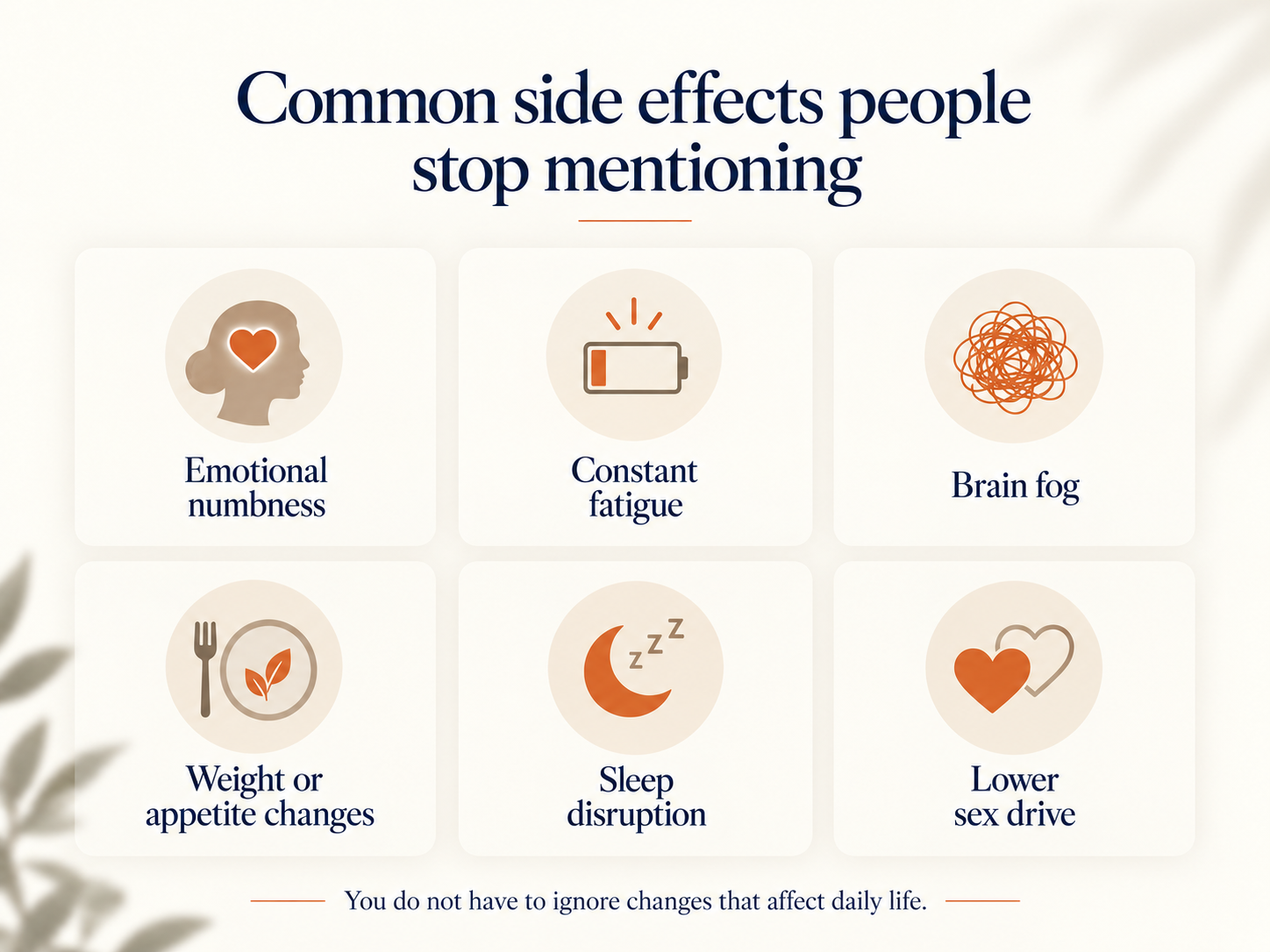
Side Effects That Gradually Become Background Noise
You do not have to ignore changes that affect your daily life. Emotional blunting, exhaustion, brain fog, appetite shifts, and sleep disruption are legitimate treatment concerns.
- Dry mouth. One of the most frequent complaints across antidepressants, stimulants, and benzodiazepines alike. It's annoying on its own, and over time it increases the risk of dental problems.
- Headaches. Common with SSRIs, especially at higher doses, and with stimulants. Frequent headaches can also be a symptom of the depression and anxiety themselves, which makes them hard to untangle.
- Gastrointestinal problems. SSRIs act on serotonin, and most of the body's serotonin receptors are in the gut, not the brain. Nausea, diarrhea, constipation, and cramping are extremely common, and many people who've been on an SSRI for years assume they simply have a sensitive stomach.
- Sleep disruption. Stimulants can make it hard to fall asleep. SSRIs can fragment sleep. Then a sleep aid gets added, which can cause next-day grogginess. The medications end up managing each other's effects.
- Emotional blunting. Less talked about, but common: the sense that the highs and lows have both been sanded down. Less despair, but also less joy. For some people this is acceptable. For others, it's the thing that makes them wonder whether the medication is treating the depression or just muffling it.
- Sexual side effects, weight changes, sweating, jitteriness. Each medication has its own list.
When the math stops working
Every medication decision is a balance: benefit against burden. When a drug clearly works, side effects are easier to accept. The problem is when the benefit is partial and the burden is real.
If you're on multiple medications, still meeting criteria for major depression, and also managing a running list of physical complaints, it's worth stepping back and asking what the regimen is actually accomplishing. Not to abandon it, but to ask whether adding a fifth medication is likely to change the answer.
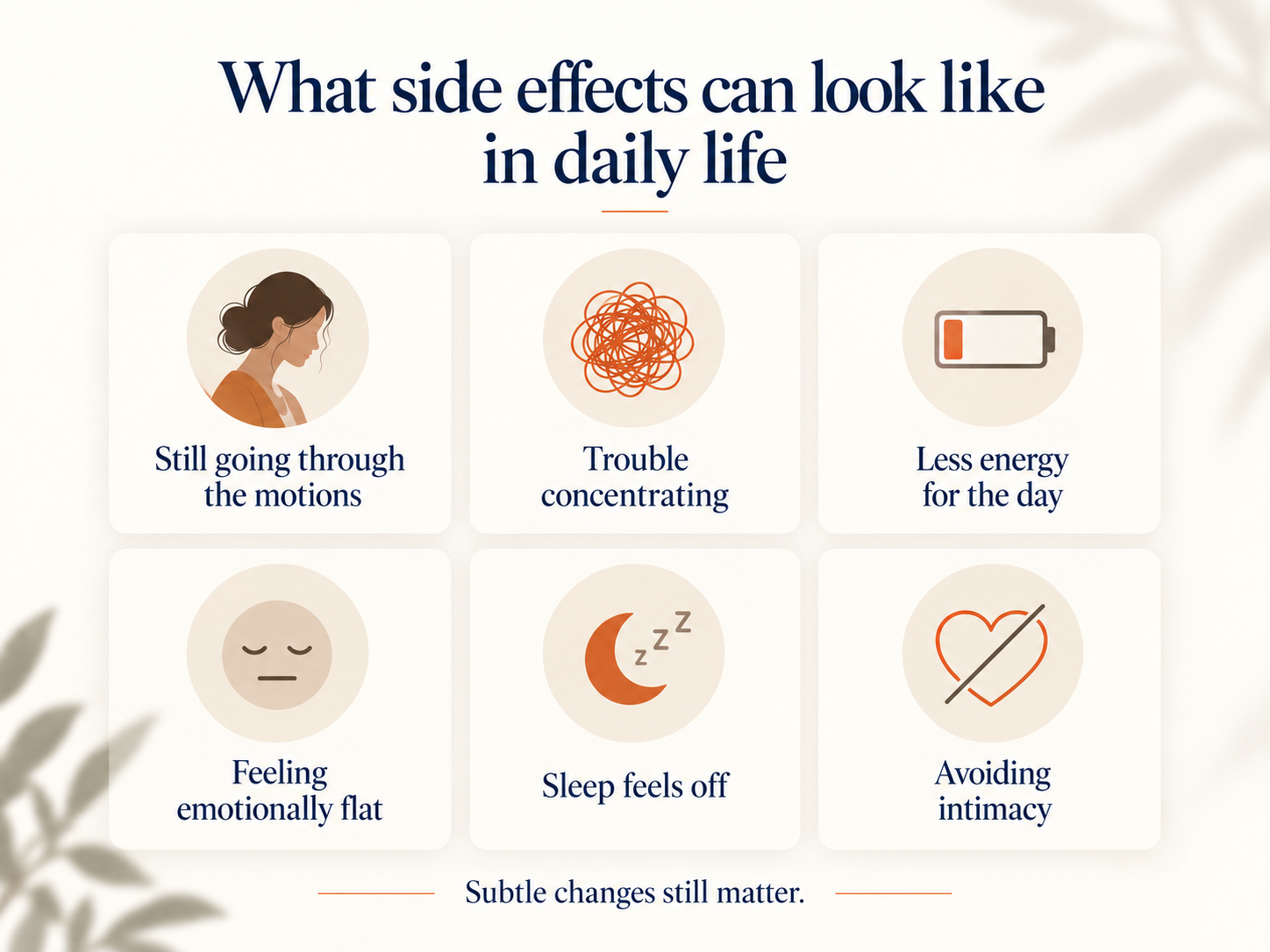
How Side Effects Show Up Day to Day
Subtle changes still matter. Going through the motions, difficulty concentrating, lowered energy, flat affect, and disrupted sleep are often chalked up to “just how things are.”
The numbers on that question are sobering. For someone who has already failed prior antidepressants, the chance that the next one produces full remission is around 14 percent, and it takes six to twelve weeks to find out. That's two to three months of new side effects for a roughly one-in-seven shot.
Why medication has a ceiling for some people
Antidepressants work on brain chemistry, and for many people that's enough. But depression is also a circuitry problem. Brain imaging consistently shows that the region behind the forehead called the dorsolateral prefrontal cortex, which regulates mood, motivation, and attention, is underactive in depression. Medication changes the chemical environment around that circuit. It doesn't directly retrain it.
That's the reason someone can be on a high dose of a good medication, take it faithfully, tolerate the dry mouth and the headaches and the stomach trouble, and still feel fundamentally unchanged. The side effects are systemic because the drug is systemic; it goes everywhere in the body to reach one region of the brain. And even when it gets there, it's working on the chemistry around the circuit, not the circuit itself.
Curious whether you'd qualify?
If you've tried medication and you're still not yourself, you may be a candidate for SAINT®. Our team will give you a straight answer.
A treatment that doesn't enter your bloodstream
Transcranial magnetic stimulation (TMS) works differently. It uses focused magnetic pulses, delivered through a coil placed against the scalp, to stimulate the underactive mood-regulation region directly. Nothing is swallowed, injected, or absorbed. There's no effect on your gut, your mouth, your sleep architecture, or your sex drive. The side effects that do exist are local and short-lived.
SAINT (Stanford Accelerated Intelligent Neuromodulation Therapy) is an accelerated, FDA-cleared form of TMS developed at Stanford's Brain Stimulation Lab. It's indicated for adults with major depressive disorder who haven't gotten adequate relief from antidepressants in their current episode. Here's how it works at a Verified SAINT Provider like Neuro Wellness TMS Centers of America:
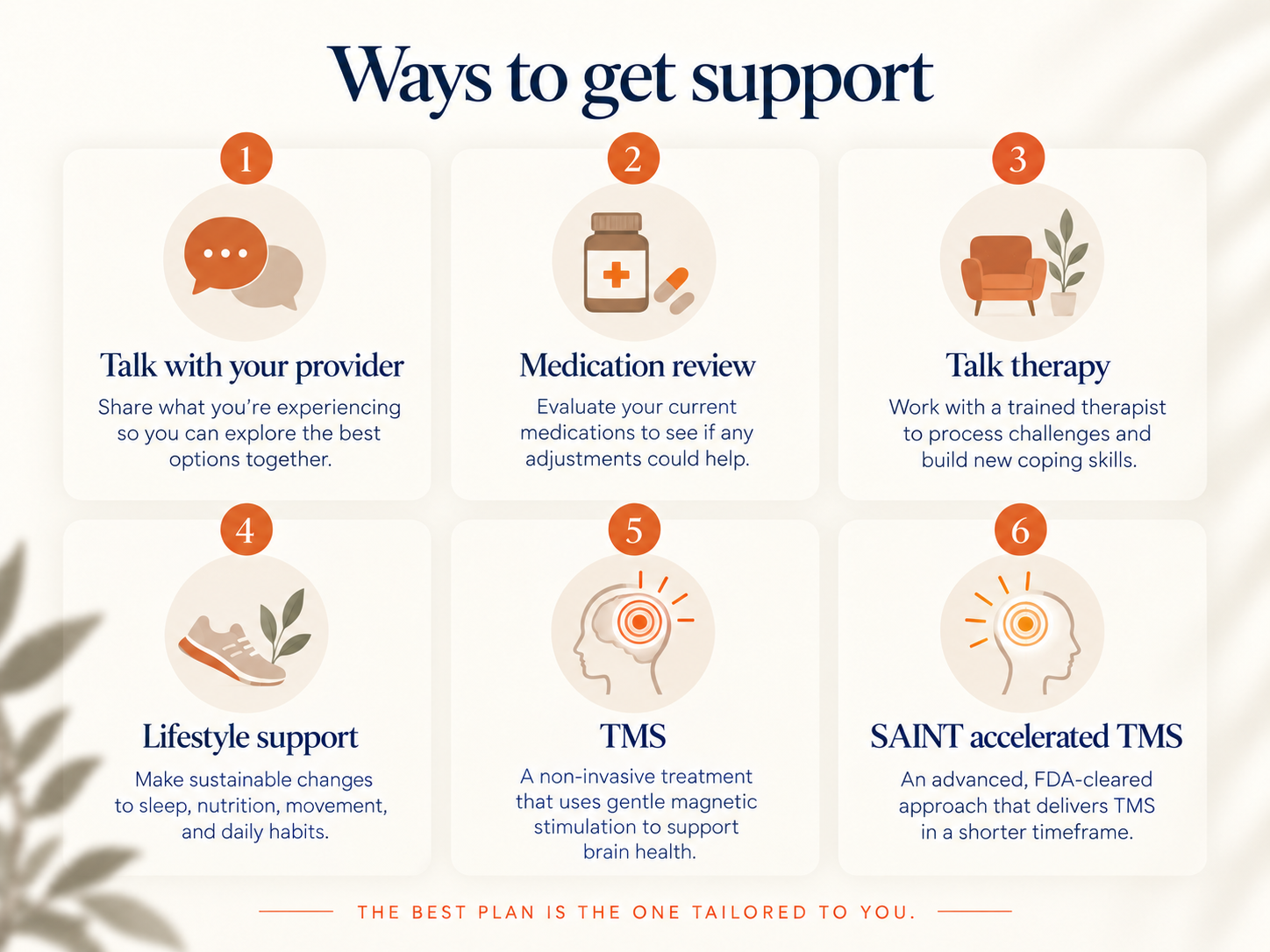
Ways to Get Support Beyond Another Medication Change
The best plan is the one tailored to you. When medications stall, exploring non-invasive neuromodulation like standard or accelerated SAINT® TMS gives your care team a circuit-level option.
- Consultation (Zoom web conference). You meet with our clinical team over a convenient Zoom call. As your evaluation evolves, you will also have the option to meet with our psychiatrist by Zoom web conference or in person at our clinic. You meet with our clinical team to review every medication you've taken, what each one did and didn't do, and the physical symptoms you've been living with, and to confirm you're a candidate.
- fMRI brain scan (mandatory in person). A roughly 45-minute functional MRI maps how your individual brain networks are wired. (Mandatory in-person scan at an imaging partner center.)
- Personalized targeting. A targeting algorithm reads your scan and identifies the exact location for stimulation. Neuronavigation guides the coil to that spot for every session.
- Five-day stimulation series (mandatory in person). In-person treatment Monday through Friday at our Coral Springs clinic. Ten 10-minute sessions per day, with 50-minute breaks in between, for five consecutive days. Five clinic visits, compared with 30 to 36 for conventional TMS. Most patients notice a change in mood within the first couple of days.
What the results and side effects actually look like
Data from published trials in treatment-resistant depression. Individual results vary.
In the clinical trials behind SAINT's FDA clearance, participants had treatment-resistant depression and had already failed prior treatments. Seventy-nine percent reached remission, with an average time to remission of 2.6 days. Across more than 400 trial patients, 85 percent experienced symptom relief, with no serious adverse events.
Compare the side-effect list to what you're carrying now. The most commonly reported effects were mild headache, fatigue, and temporary scalp discomfort at the treatment site, typically resolving on their own. No dry mouth. No GI disruption. No weight change. No sexual side effects. SAINT isn't appropriate for people with non-removable metal in or near the head or an implanted device, and you'll be screened for these at your consultation.
You don't have to stop your current medications to pursue SAINT. Most patients continue their existing regimen through treatment. But many find that once the depression lifts, the conversation with their prescriber about simplifying the regimen becomes possible for the first time.
What to bring to your next appointment
Whether you're seeing your current prescriber or coming in for a consultation, write this down:
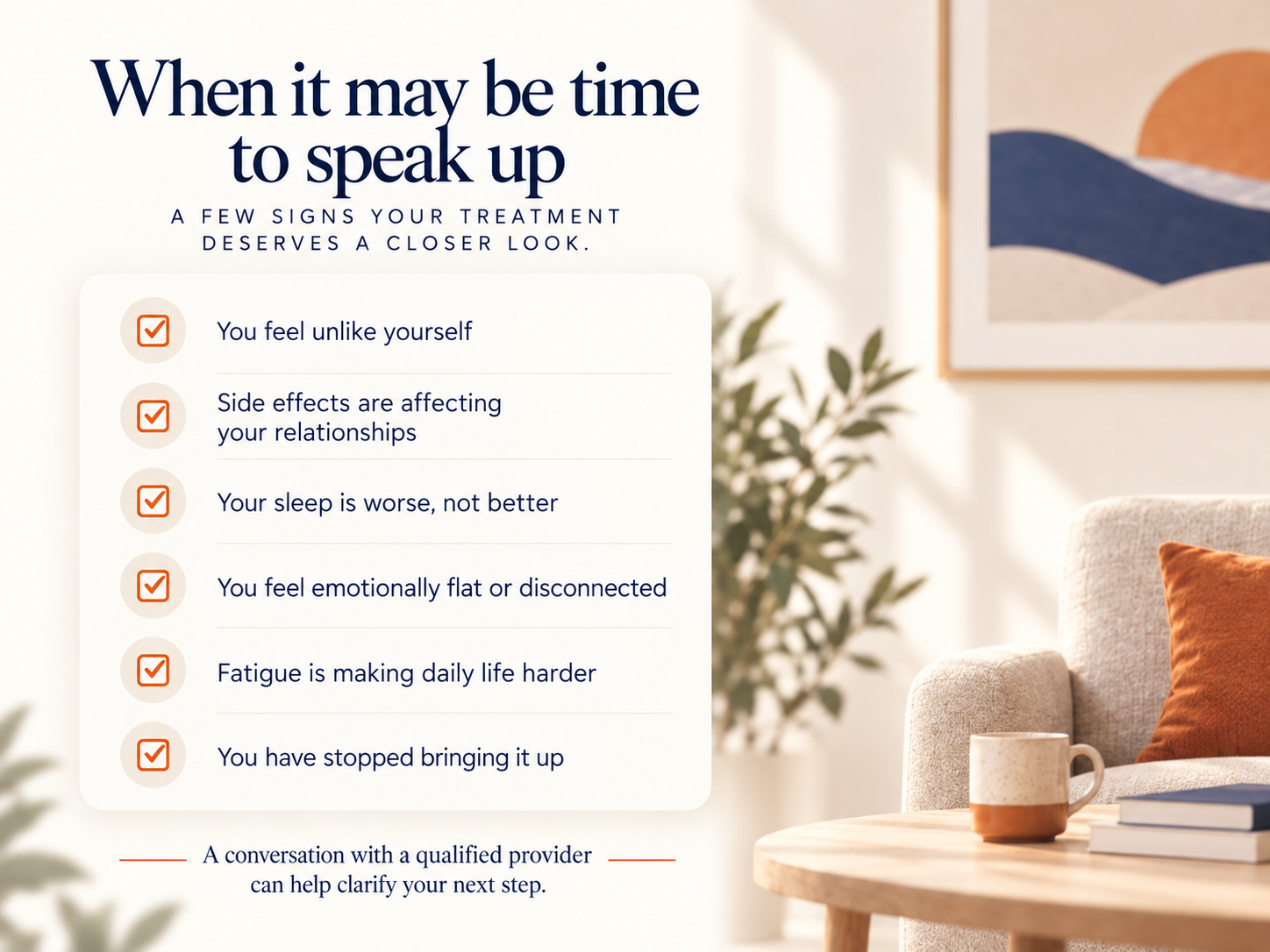
Signs Your Current Treatment Deserves a Closer Look
A conversation with a qualified provider can clarify whether your medication burden is still serving you or whether an alternative path makes more sense.
- Every medication you're taking, with doses, including the "as needed" ones
- Every medication you've stopped, and why
- The physical symptoms you've stopped mentioning
- What each medication has actually done for your mood, honestly
That information is the foundation of any good treatment decision.
What to do next

A Private, Unhurried Evaluation
Review your entire medication history, discuss what you've experienced, and get an honest clinical assessment of whether TMS or SAINT® makes sense.
If you've been carrying side effects for years in exchange for partial relief, you're allowed to want a better deal.
At Neuro Wellness TMS Centers of America, the first appointment is an evaluation, not a commitment. We'll do a full review of your medication history and its effects, both the intended ones and the ones you've learned to live with, and tell you plainly whether SAINT is a good option for you. We offer private outpatient care with a dedicated care team and weekend availability. Insurance coverage varies by plan; our team can help you understand your options, including prior authorization and self-pay.
Schedule a consultation: 954-827-9793
Never stop or change a psychiatric medication without talking to your prescriber. If you are in crisis or thinking about harming yourself, please call or text 988 (Suicide and Crisis Lifeline) or go to your nearest emergency room. This article is for educational purposes and is not a substitute for individual medical advice.
Frequently Asked Questions
Can antidepressants cause dry mouth, headaches, and stomach problems?
What is emotional blunting on antidepressants?
What is the remission rate for another antidepressant after prior ones have failed?
Does TMS have the same side effects as medication?
Do I have to stop my medication to do SAINT?
What should I bring to my next appointment?
Explore Related Resources
You've Tried Everything. Why Is the Depression Still Here?
What treatment-resistant depression means and why medications don't work for everyone.
How SAINT Compares to Other Depression Treatment Options
A side-by-side comparison of SAINT, standard TMS, ECT, esketamine, and medication.
Am I a Candidate for TMS?
What clinicians consider when evaluating TMS eligibility.
SAINT® TMS in Coral Springs, FL
The full SAINT treatment page with outcomes, cost, and FAQs.
Why Am I So Tired All the Time? Depression Fatigue
How depression drains energy and why rest doesn't fix it.
High-Functioning Depression Symptoms: 10 Quiet Signs
Everyday habits that can be quiet signs of depression.
Ready to talk to someone?
The hardest part is usually the first phone call. Everything after that is a series of small, defined steps.
You Don't Have to Figure This Out Alone
Schedule a Consultation