
You Just Started Therapy at 27. That's Not Late. That's the Beginning.
A month ago you saw a therapist for the first time. A few weeks ago you saw a psychiatrist. You're in your late twenties, and you're only now starting to deal with something you've probably had for years. If that's where you are, this is for you.
Last updated November 3, 2026.
Want to know if SAINT® is right for you?
Tell us about your treatment history and symptoms. A consultation is an evaluation, not a commitment — and it starts with your story.
Why people wait
A month ago you saw a therapist for the first time. A few weeks ago you saw a psychiatrist. You're in your late twenties, you have a job and a partner and kids, and you're only now starting to deal with something you've probably had for years.
There's a specific feeling that comes with that. Some relief, because you finally did it. Some embarrassment, because it took this long. And a lot of uncertainty, because now you're in a system you don't understand, being asked questions you don't know how to answer, with a treatment plan that's already changing.

Most adults who eventually get treated for depression waited years, often a decade or more, between the first symptoms and the first appointment. The reasons are ordinary and human:
- You assumed everyone felt this way
- You were functioning, so it didn't seem serious enough
- Depression or anxiety was normal in your family, so it didn't register as a problem
- You didn't have time, or money, or a clear idea of where to start
- Some part of you believed that asking for help meant something was wrong with you
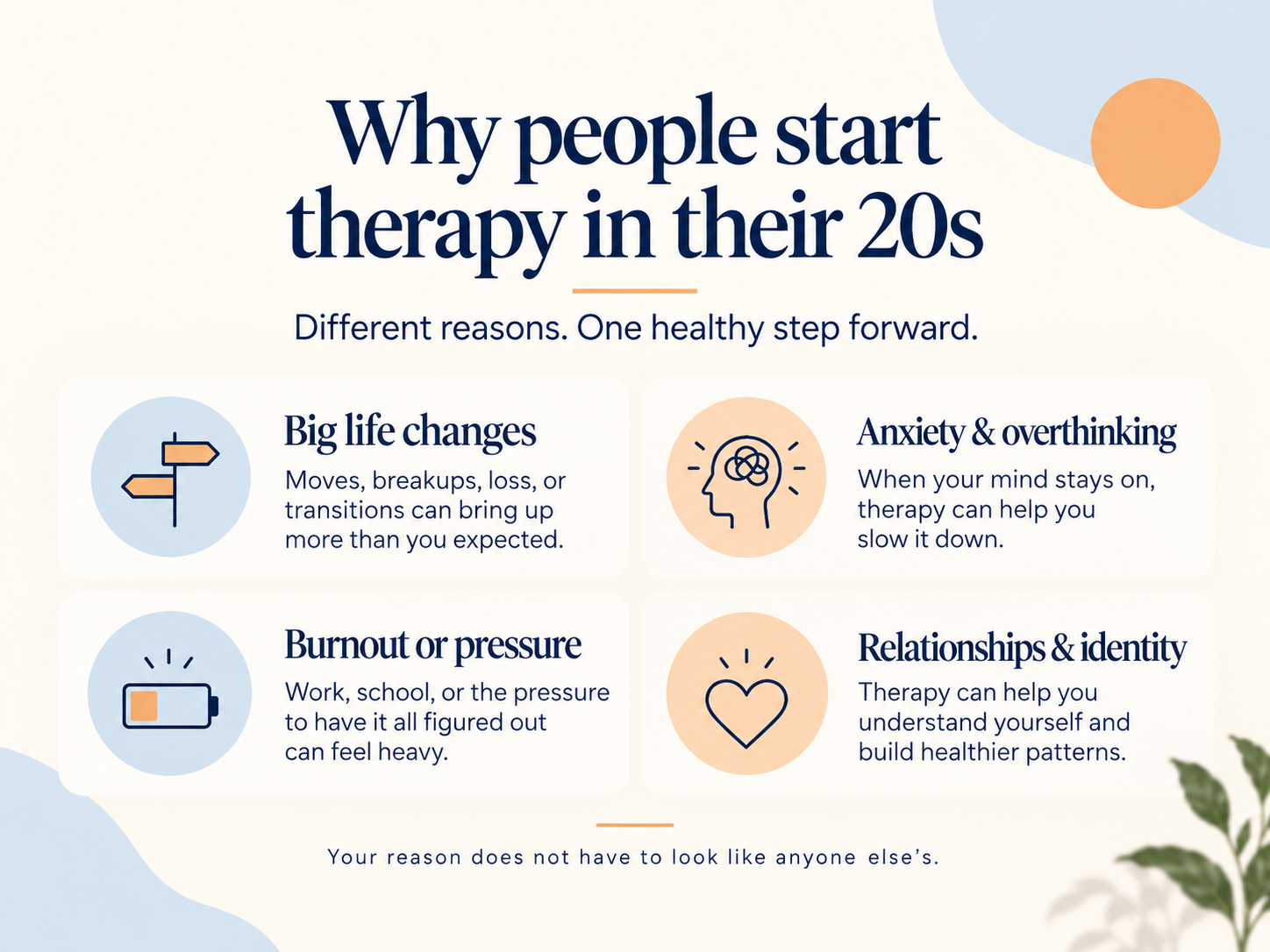
None of those are failures. They're the reasons the system is hard to enter. The fact that you're in it now is what matters.
What the first weeks actually feel like
Nobody tells you this: the beginning of treatment is often disorienting. You're meeting new people, filling out questionnaires, explaining your history over and over, and being handed a diagnosis that may feel bigger than you expected. "Major depressive disorder, recurrent, severe" is a jarring thing to see written down when you've been telling yourself you're just tired.
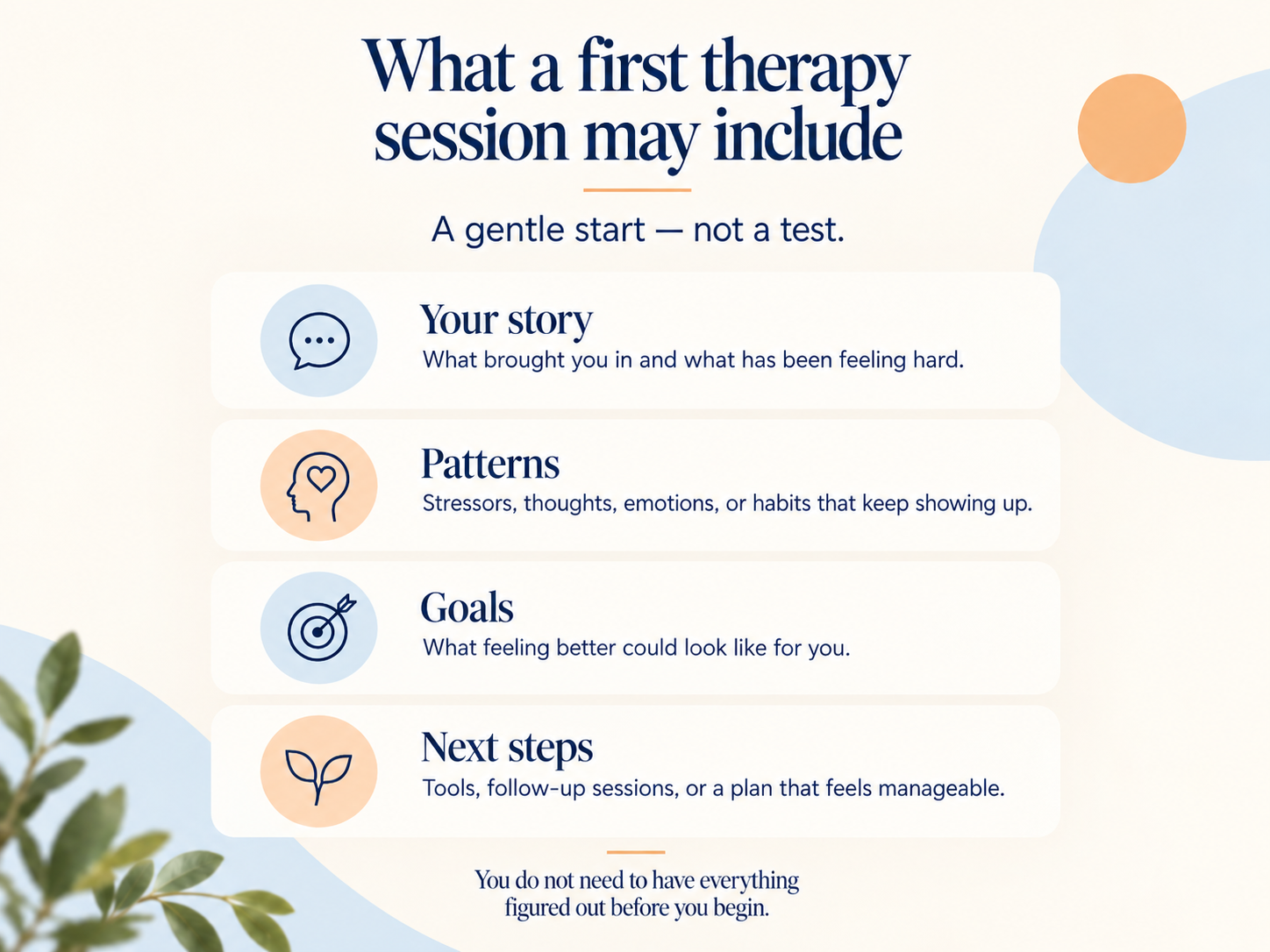
You may also be adjusting to medication changes, or realizing that medications you've already tried didn't do what they were supposed to. It's common to arrive at treatment having already been through an antidepressant or two, a stimulant, a sleep aid, and to feel like you're starting over even though you've been at this a while.
That's not starting over. That's the history your new treatment team needs.
The questions you're afraid to ask
Is this going to take years? Not necessarily. Therapy is often ongoing, but that doesn't mean feeling like this is ongoing. Effective treatment should produce noticeable change in weeks to months, not years. If it doesn't, that's information, not failure.
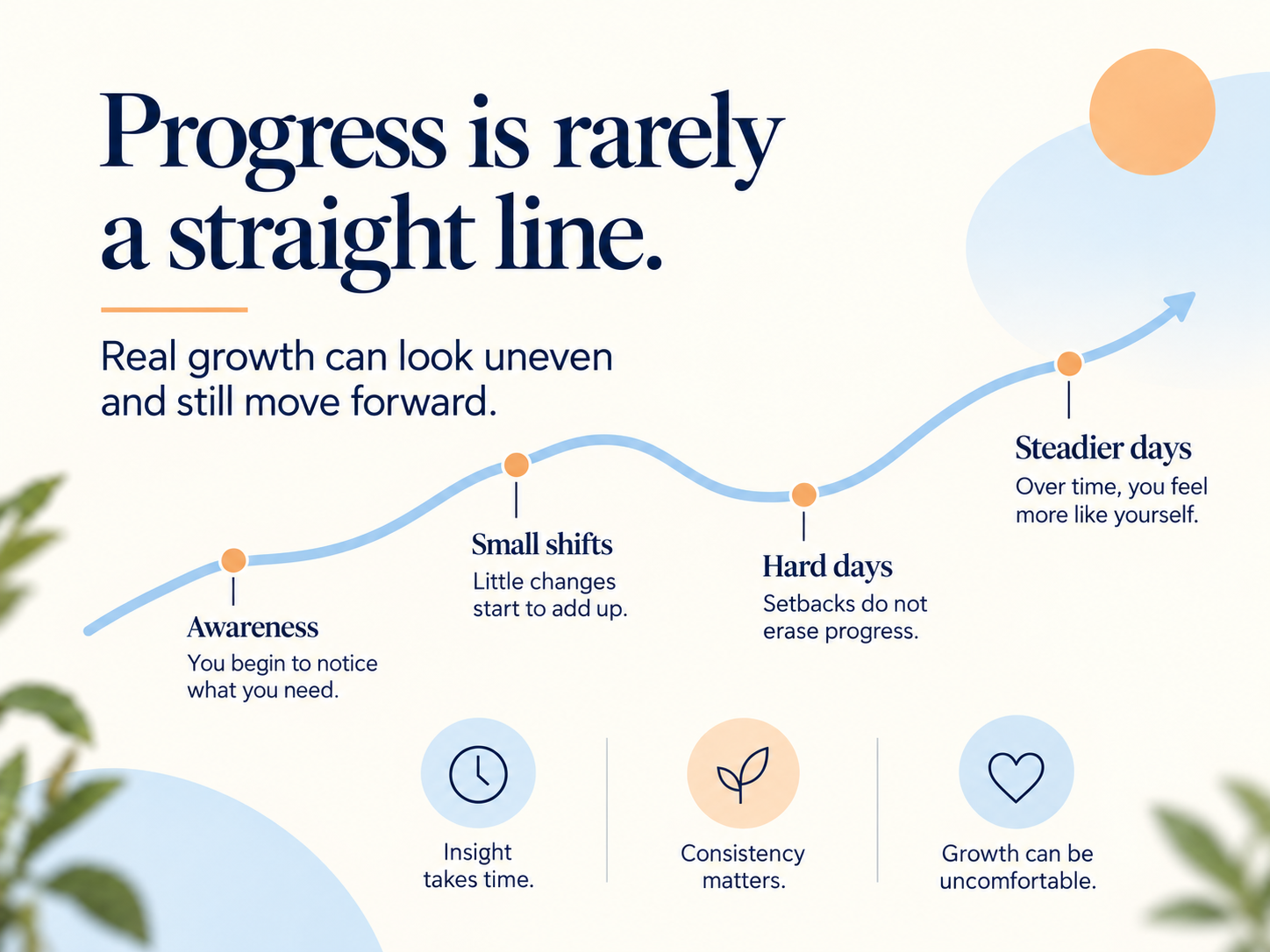
What if the medication doesn't work? Then you try something else. And if that doesn't work either, there are treatments that don't rely on medication at all. You're not at the end of the road; you're at the start of a road with more branches than most people realize.
Should I have done this sooner? Probably. So should almost everyone. You did it now. That counts.
Is it okay that I'm still functioning? Yes. Functioning doesn't mean you're fine, and being not-fine doesn't require you to fall apart before you deserve help.
Curious whether you'd qualify?
If you've tried medication and you're still not yourself, you may be a candidate for SAINT®. Our team will give you a straight answer.
Being your own advocate early
Here's what people who've been through the system wish they'd known at the start:
- Keep a record. Every medication, dose, start and stop date, and what it did. You will be asked for this repeatedly, and your memory will get fuzzy.
- Track your symptoms. The PHQ-9 and GAD-7 questionnaires you fill out are your progress markers. Ask what your scores are and what they mean.
- Set a timeline. Ask your prescriber how long a given treatment should take to show effect, and what the plan is if it doesn't. "Let's see how it goes" is not a plan.
- Ask about the full range of options. Therapy and medication are the first steps, not the only steps. The definition of treatment-resistant depression is failing to get adequate relief from antidepressant medication, not failing ten of them. You may qualify for other options sooner than you think.
Why starting now is different from starting a decade ago
One real advantage of entering treatment today rather than ten years ago is that the options are better. Antidepressants are still the first line, and for many people they work. But for those who don't respond, the chance that yet another medication produces full remission is only around 14 percent, and each trial takes six to twelve weeks to evaluate. A decade ago, the alternatives after that were slow, demanding, or both.
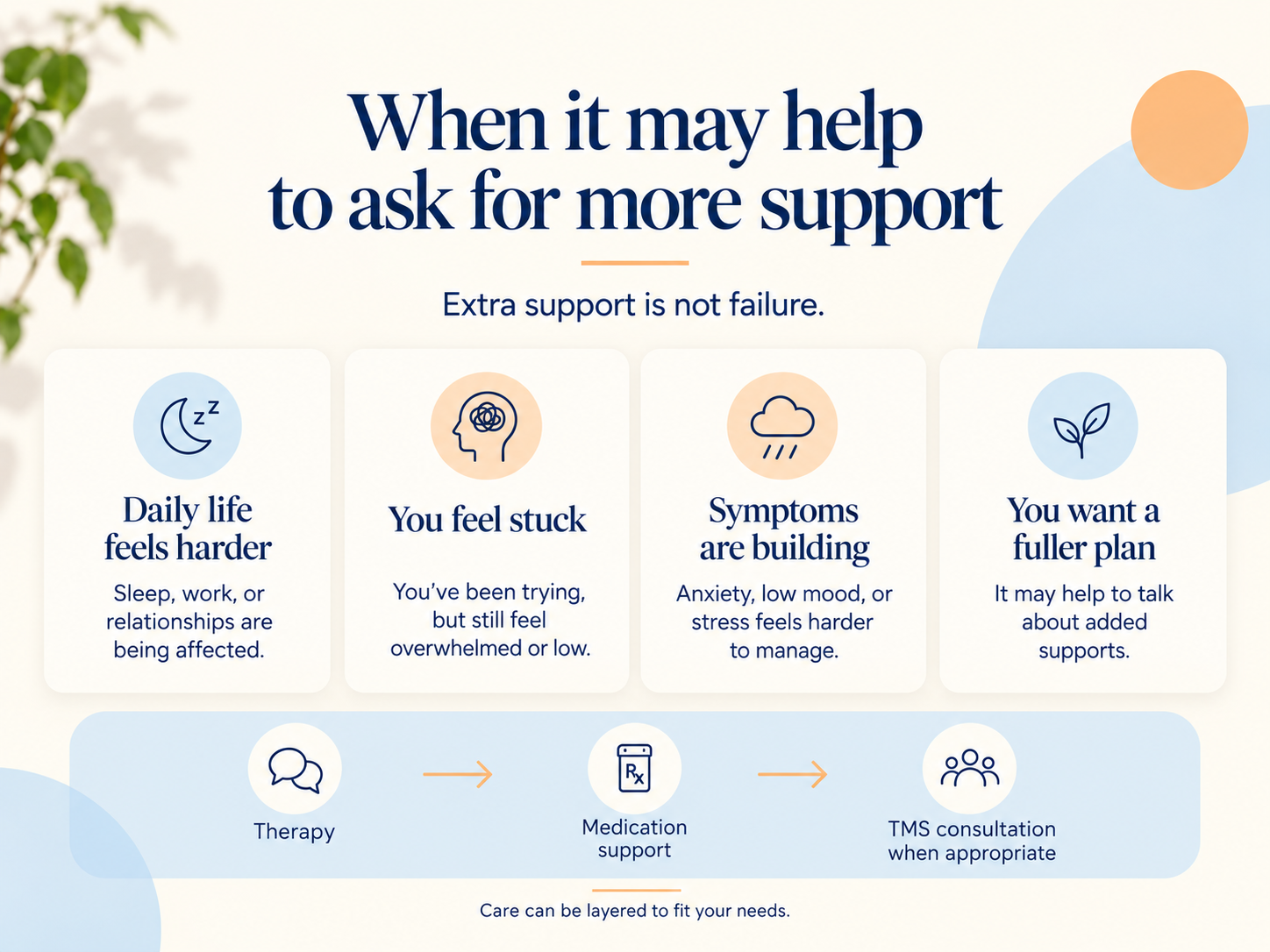
That's changed. Depression isn't only a chemistry problem; it's also a circuitry problem. Brain imaging consistently shows that the region behind the forehead called the dorsolateral prefrontal cortex, which regulates mood, motivation, and attention, is underactive in depression. Medication changes the chemical environment around that circuit. Transcranial magnetic stimulation (TMS) stimulates the circuit directly, using focused magnetic pulses through a coil on the scalp, with no anesthesia and nothing entering your bloodstream.
What SAINT means for someone just getting started
SAINT (Stanford Accelerated Intelligent Neuromodulation Therapy) is an accelerated, FDA-cleared form of TMS developed at Stanford's Brain Stimulation Lab and cleared in 2022. It's indicated for adults with major depressive disorder who haven't gotten adequate relief from antidepressants in their current episode.
In the clinical trials behind its clearance, 79 percent of participants reached remission, with an average time to remission of 2.6 days. Across more than 400 trial patients, 85 percent experienced symptom relief, with no serious adverse events. The most common side effects were mild headache, fatigue, and temporary scalp discomfort.
Data from published trials in treatment-resistant depression. Individual results vary.
Here's how it works at a Verified SAINT Provider like Neuro Wellness TMS Centers of America:
- Consultation. You meet with our clinical team to review your history, including the medications you've already tried, and confirm whether you're a candidate. If you're new to treatment and it's too early, we'll tell you that and explain what would need to happen first. The initial consultation is a Zoom call; as steps evolve, you'll also have the option to meet with our psychiatrist by Zoom web conference or in person. The mandatory in-person steps include fMRI mapping and the actual treatment.
- fMRI brain scan. A roughly 45-minute functional MRI maps how your individual brain networks are wired.
- Personalized targeting. A targeting algorithm reads your scan and identifies the exact location for stimulation. Neuronavigation guides the coil to that spot for every session.
- Five-day stimulation series. Ten 10-minute sessions per day, with 50-minute breaks in between, for five consecutive days. Five clinic visits, compared with 30 to 36 for conventional TMS. For a working parent, that's one arranged week, not two months of daily appointments.
You don't have to stop your current medications or your therapy. Most patients continue their existing regimen through treatment. SAINT isn't appropriate for people with non-removable metal in or near the head or an implanted device, and you'll be screened for these at your consultation.
You may not need it. Therapy and medication work for many people. But if you've already tried medication and you're still meeting criteria for severe depression, you don't have to wait until you've exhausted every pill before considering it.
What to do next
Starting treatment is the hardest step. Knowing what to do when the first steps don't fully work is the second hardest. You don't have to figure it out alone.
At Neuro Wellness TMS Centers of America, we see many people who are newly in treatment and already wondering what comes next. The first appointment is an evaluation, not a commitment. We'll lay out your whole history, give you an honest read on where you are, and tell you whether SAINT is an option for you now. We offer private outpatient care with a dedicated care team and weekend availability. Insurance coverage varies by plan; our team can help you understand your options, including prior authorization and self-pay.
Schedule a consultation: 954-827-9793
If you are in crisis or thinking about harming yourself, please call or text 988 (Suicide and Crisis Lifeline) or go to your nearest emergency room. This article is for educational purposes and is not a substitute for individual medical advice.
Frequently Asked Questions
Is 27 too late to start therapy or psychiatric treatment?
What if my first medication doesn't work?
How long should treatment take to show results?
Can I still function and qualify for advanced treatment?
Do I have to stop therapy or medication to do SAINT?
How is SAINT different from standard TMS for someone just starting out?
Explore Related Resources
You've Tried Everything. Why Is the Depression Still Here?
What treatment-resistant depression means and why medications don't work for everyone.
Understanding Your PHQ-9 and GAD-7 Scores (And Why 'Moderate' Can Still Mean Severe)
What the numbers on your intake questionnaires actually mean.
High-Functioning Depression: When Holding It Together Is the Problem
Functioning isn't the same as being okay — and why severe depression hides behind a polished exterior.
What Is SAINT TMS Therapy?
How the five-day, fMRI-guided protocol works.
Ready to talk to someone?
The hardest part is usually the first phone call. Everything after that is a series of small, defined steps.
You Don't Have to Figure This Out Alone
Schedule a Consultation